SDVOSB · VETERAN-LED
HomeAbout HQESolutionsIndustriesClient SuccessContact UsResellersModulesFeaturesRequest a Demo
Home/Industries/Oil & Gas Fields
// Case Study · Energy — Upstream Oil & Gas

Survivable warning where there's no cell tower.

A remote upstream operator needed H2S gas, fire and evacuation alerting across scattered well pads — working entirely off-grid, and hardened for hazardous Class I Div 2 zones.
ClientUpstream oil & gas operator
RegionPermian Basin
Deployment10 months
Scale22 sites · 90-mile corridor
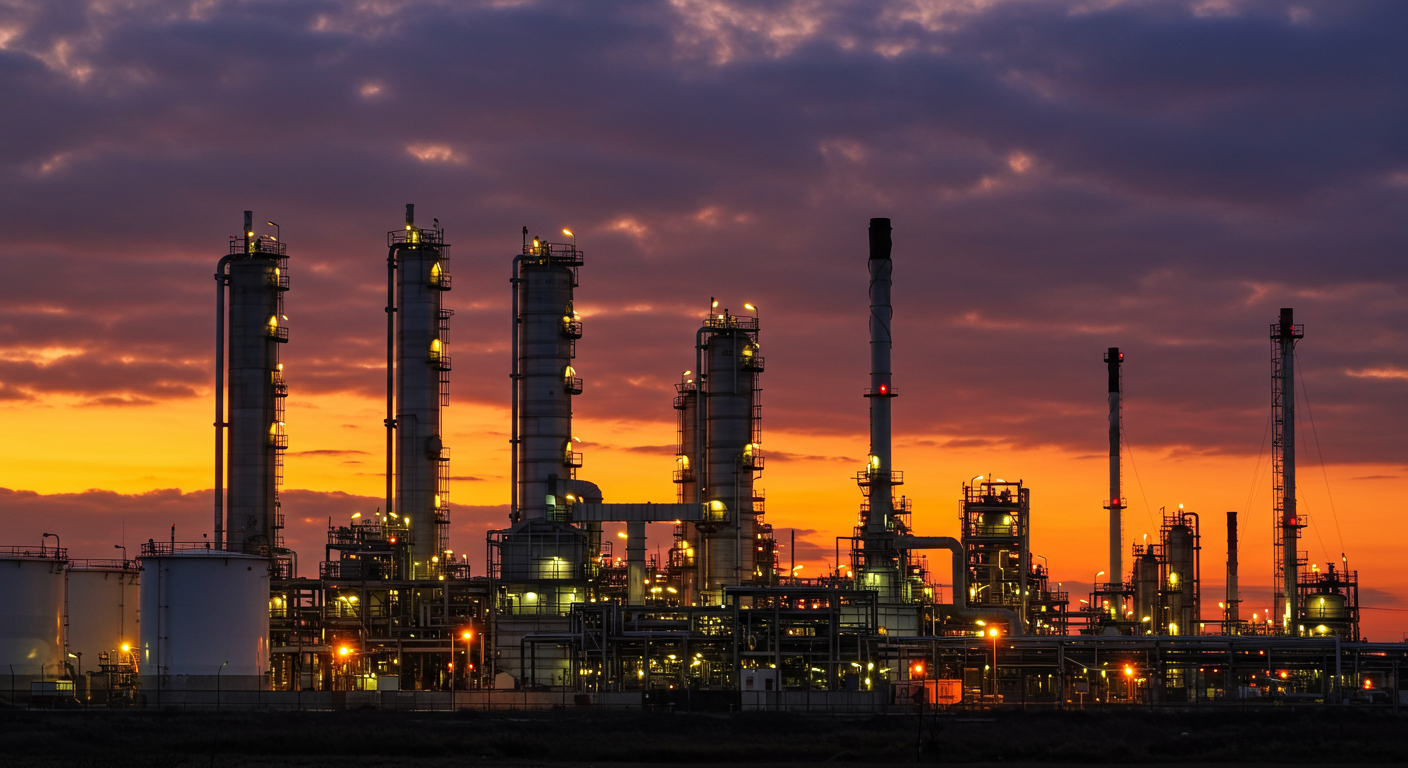
Oil refinery and pipeline infrastructure
PLANT DeploymentOPERATIONAL
H2S detectionGas-to-alert autoMONITORING
SAFE meshOff-grid radioLINKED
Voice sirensClass I Div 2 ratedARMED
22
Well pads
90mi
Field corridor
0
Cell dependency
8s
Gas-to-alarm
// The Operational Reality

No signal, hazardous gas, and lone workers spread across 90 miles.

At the pad there's no cellular and no fiber — any warning system that assumed a network was a non-starter. Gas and fire detection existed, but it wasn't tied to alerting: a sensor could trip and the crew two pads over would never know.

Everything had to carry hazardous-area ratings, and the operator had no reliable way to account for lone workers during an evacuation.

No connectivityNo cellular or fiber at the well pad to carry alerts.
Detection not tied to alertingH2S / fire sensors tripped without warning the wider field.
Hazardous-area ratingsAll field hardware required Class I Div 2 certification.
Lone-worker riskNo accountability for isolated workers during an evacuation.
// The HQE Solution

A unified system, engineered to fit.

HQE made the SAFE mesh the network — a self-healing radio backbone that turns any sensor trip into a field-wide warning.

1
Backbone

SAFE off-grid mesh

A self-healing radio mesh links all 22 pads across the corridor with zero dependence on cellular or fiber.

2
Automate

Detector-to-siren logic

H2S and fire detectors trigger voice-siren warning and evacuation automatically across the affected zone.

3
Harden

Class I Div 2 hardware

Every siren, controller and beacon is rated for the hazardous atmosphere it sits in.

4
Account

Lone-worker & muster

Geo-fenced check-in and muster tracking confirm every isolated worker is clear.

// Systems Deployed

The stack behind it.

Every deployment integrates the systems you already own, unified through HQE's proprietary ML/AI-powered ecosystem — all in one pane of glass.

SAFE Network Intelligent Voice Sirens Fortress Security Gas / Fire Integration Lone-Worker Safety
// How We Deliver

From survey to sustained operations.

A disciplined, mission-grade delivery process — the same five phases on every HQE engagement.

01

Assess

RF / coverage survey, threat model & compliance gap analysis on-site.

02

Design

System design engineered to your existing infrastructure, facilities and mandates, regardless of the brands already installed.

03

Integrate

Bridge existing systems — alarms, access, C2 — into one pane of glass.

04

Deploy

Phased install, load-testing, live drills & operator certification.

05

Sustain

24/7 monitoring, supervised health & lifecycle support contract.

// The Outcome

Measurable mission impact.

0

Cellular dependency

The SAFE mesh carries every alert with no carrier network.

0s

Gas-to-alarm

A detector trip becomes a field-wide warning in under eight seconds.

0%

Muster accountability

Every lone worker accounted for at the muster point.

Out here there's no signal — the SAFE mesh is the network. When a sensor trips, the whole field knows in seconds.
HSHSE ManagerUpstream operator
// Explore More

Related industries.

// Built for Energy — Upstream Oil & Gas

Let's design your Oil & Gas Fields solution.

Tell us your operational pain-points. Our veteran-led team will engineer a future-proof, fully-integrated life-safety & security solution around them.